AI dispatch for commercial service teams

After-hours calls, ready to dispatch.

Answer overflow calls, collect technician-ready details, and route each request using your on-call rules.

See the call flow

Voicemail or dispatch-ready?

Same caller. Same freezer failure.

01Voicemail

“Leave your name, number, and a brief message after the tone.”

Callback and qualification still required.

Transcript

Recorded message: Thanks for calling Northstar Refrigeration Service. Our office is currently closed. Please leave your name, phone number, and a brief message after the tone. We’ll return your call as soon as possible. Caller: Hi, this is Daniel from the downtown restaurant. Our walk-in freezer is getting warm. Please call me back as soon as you can.
02AI dispatch

“I can collect the details for the on-call team.”

Structured request ready for technician review.

Transcript

AI dispatcher: Thanks for calling Northstar Refrigeration Service. I can collect the details for the on-call team. What equipment needs attention? Caller: Our walk-in freezer is at eighteen degrees and still rising. AI dispatcher: Understood. Are you an existing customer, and is there any smoke, gas smell, fire, or electrical hazard? Caller: We’re an existing customer. There’s no safety hazard. AI dispatcher: Thank you. I’ll send the equipment, temperature, safety, and callback details to the on-call technician for review. I can’t promise an arrival time. What is the service address? Caller: Two fourteen Market Street. The rear service entrance is open. AI dispatcher: Got it. Your after-hours request has been recorded for the on-call technician. What is the best callback number?

Fictional example. Your rules define the workflow.

The equipment does not wait for office hours.

A failure arrives during service. Your technician still needs the right facts before deciding what happens next.

A walk-in begins warming after dinner service.

An ice machine stops during a busy shift.

A manager calls while dispatch is handling another request.

Voicemail records a message. It does not create a dispatch-ready handoff.

From first ring to dispatch-ready request.

  1. 01Call arrives
  2. 02Account and service area checked
  3. 03Equipment failure qualified
  4. 04Safety and urgency rules applied
  5. 05On-call technician alerted
  6. 06Service request recorded
  7. 07Caller receives confirmation

Start with dispatch. Add revenue recovery when it fits.

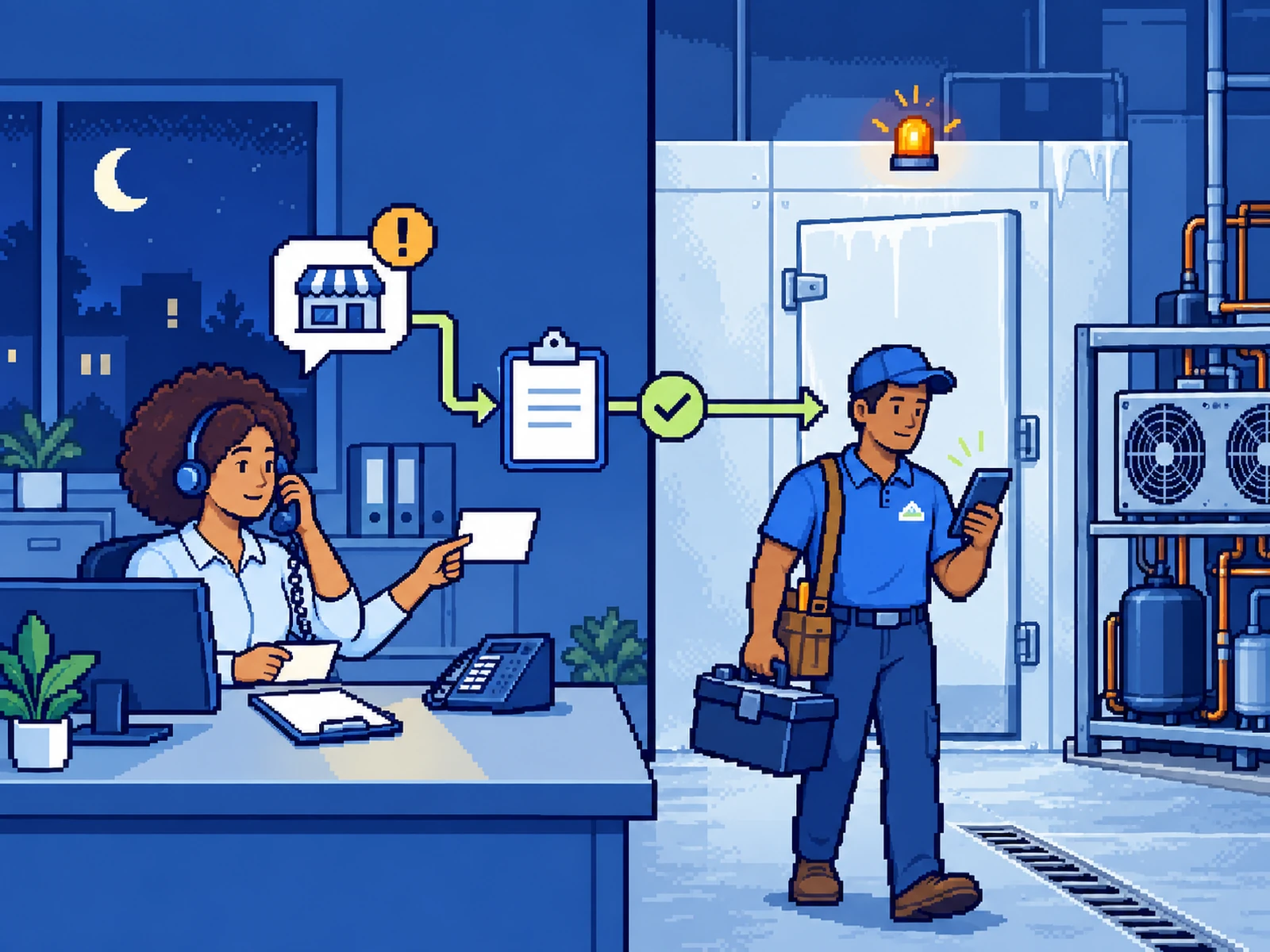
A dispatcher routes an after-hours refrigeration call to an on-call technician.

Primary service

After-hours AI dispatch

Answer overflow and after-hours calls, collect the details your technician needs, and escalate urgent failures using your rules.

Explore AI dispatch

Service-request response

Respond while the request is active.

Reply to forms, missed calls, messages, and referrals before the request disappears into an inbox.

Explore instant response
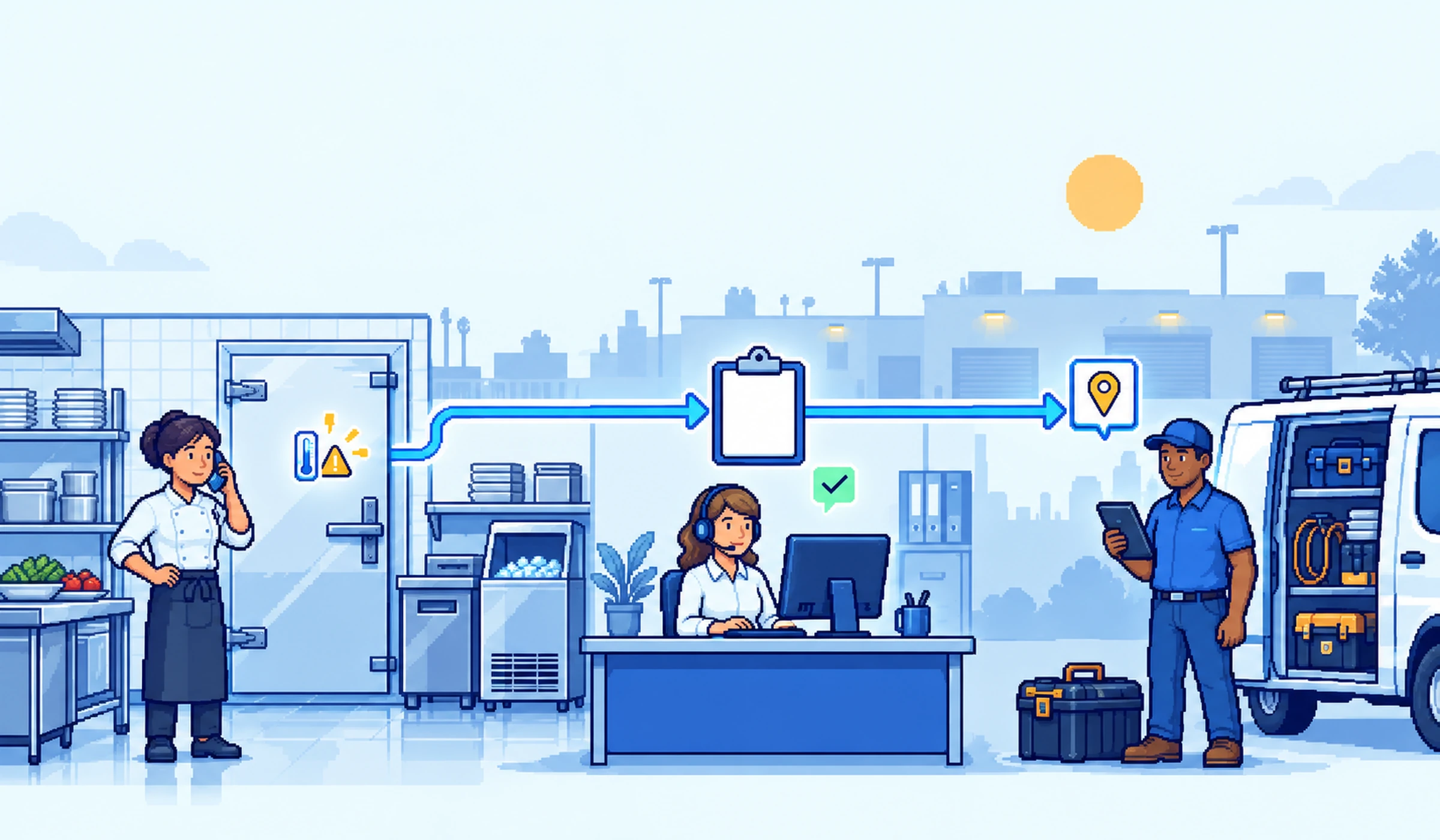
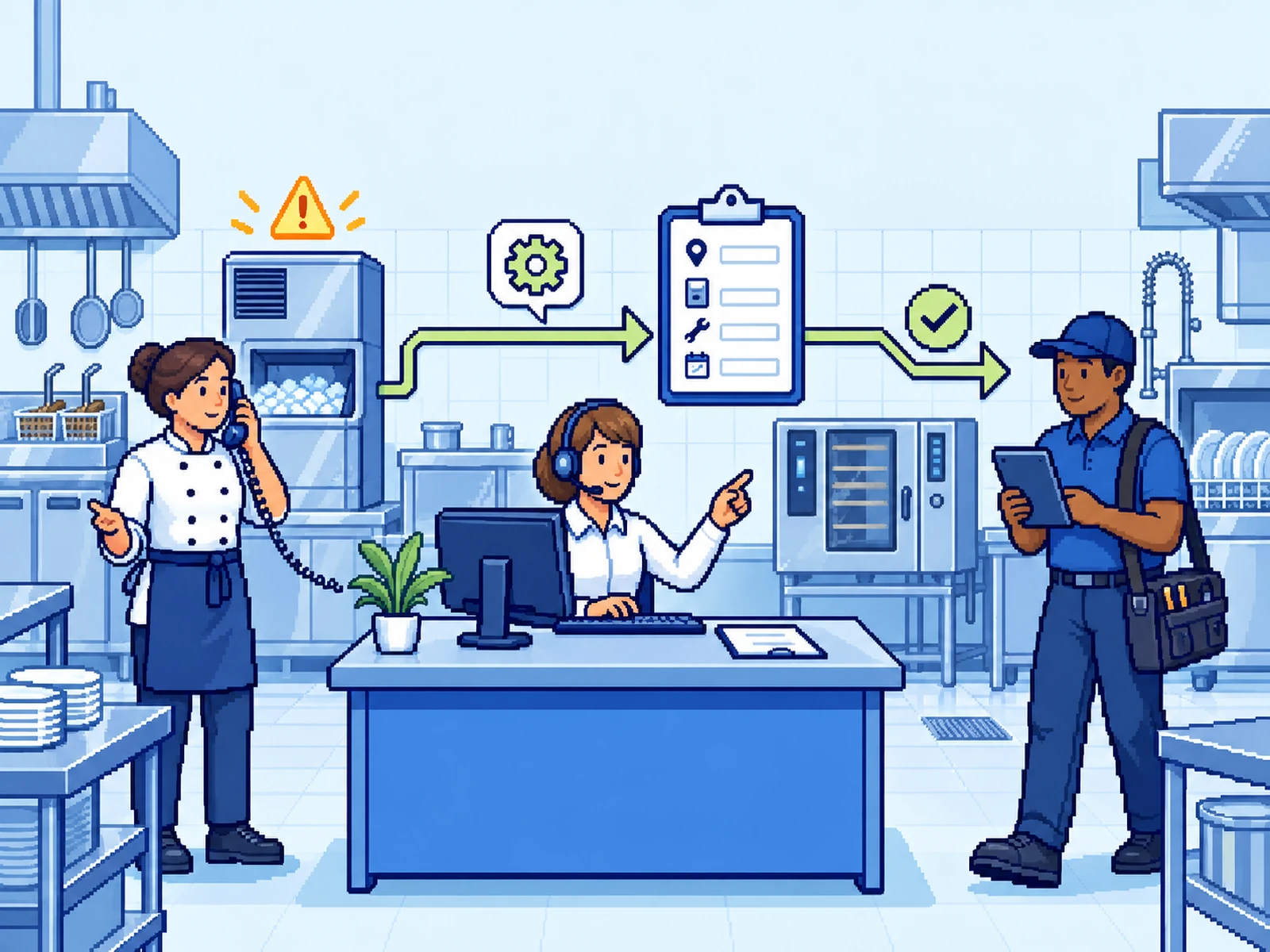
A commercial kitchen service request moving from caller to dispatcher and technician.
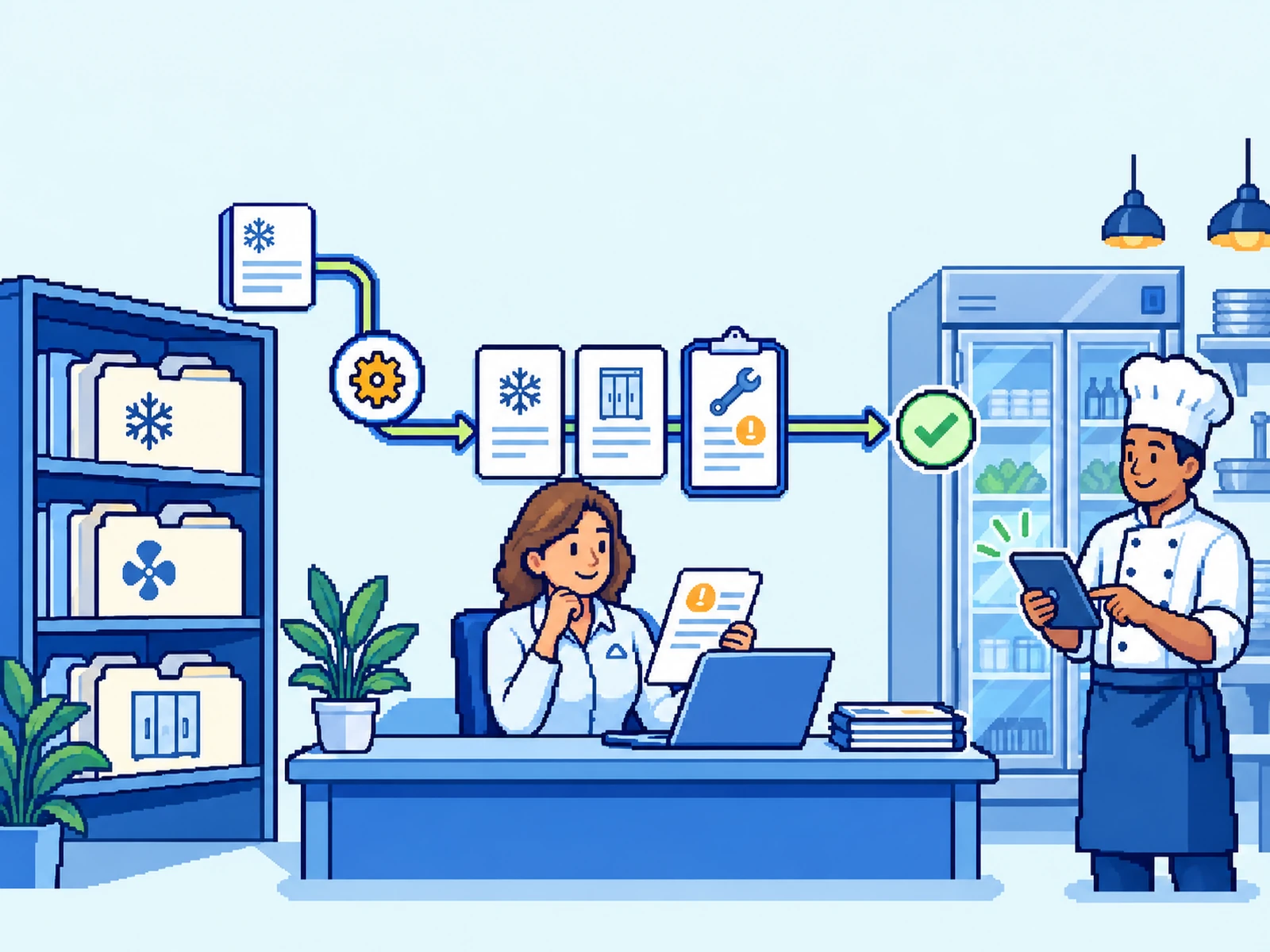
A service manager reviews maintenance history before a human-approved customer follow-up.

Account reactivation

Turn service history into timely follow-up.

Use unapproved estimates, expired maintenance agreements, and dormant accounts to prepare responsible outreach.

Explore account reactivation

Give technicians the details they need.

The dispatcher follows a structured intake instead of guessing, diagnosing, or passing along a vague voicemail.

Example intake sheetDispatch-ready fields

Caller and site

  • Caller and company
  • Site address
  • Preferred callback number
  • Site-access instructions

Equipment and failure

  • Equipment category
  • Manufacturer and model, when available
  • Current temperature
  • Symptoms and error code

Risk and routing

  • Food or inventory at risk
  • Existing account or service agreement
  • Safety concerns
  • Urgency and escalation result

Human escalation

Automate intake. Keep human judgment.

The dispatcher gathers information and applies your rules. It does not replace technical or safety decisions.

  • Does not diagnose equipment or give repair instructions.
  • Does not make safety guarantees.
  • Does not promise arrival times without confirmed availability.
  • Routes gas, fire, electrical, food-safety, and personal-safety concerns using predefined rules.
  • Transfers uncertain calls to a person and records what happened for review.

Built for commercial service teams.

Flow Optics serves the repair companies behind restaurants, hotels, grocery stores, schools, hospitals, convenience stores, and institutional kitchens.

Commercial refrigeration contractors

Food-equipment service companies

Ice-machine specialists

Hot-side equipment specialists

Multi-trade commercial kitchen service firms

Start with overflow. Expand after it works.

A contained pilot lets your team review real calls, handoffs, and edge cases before the system takes on more traffic.

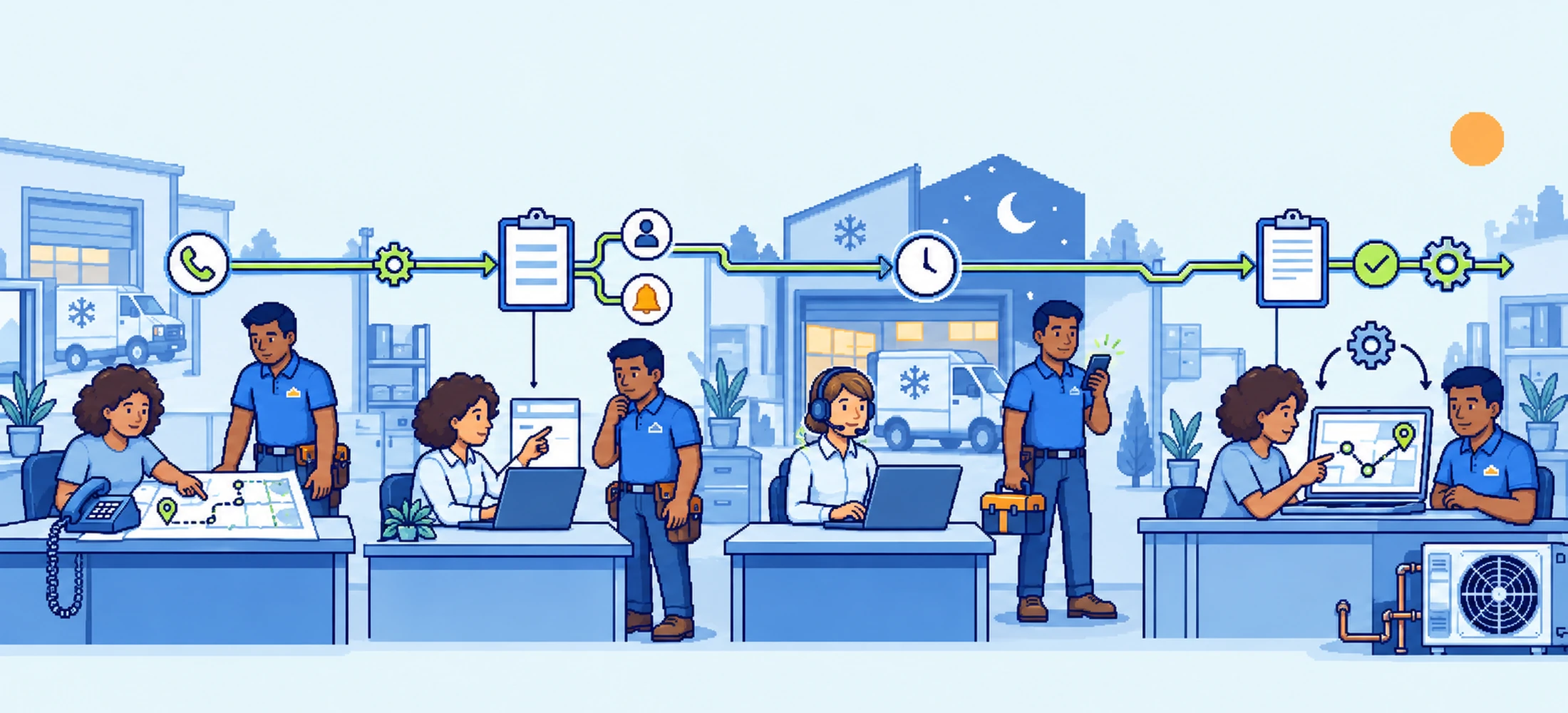
Four connected implementation moments: tracing, configuring, piloting, and improving a dispatch route.
  1. Trace

    Review actual call paths, escalation rules, service areas, and current tools.

  2. Configure

    Build intake questions, routing logic, notifications, and human fallbacks.

  3. Pilot

    Start with overflow or after-hours traffic instead of replacing the entire front desk.

  4. Improve

    Review transcripts, missed intents, dispatch outcomes, and edge cases.

Workflow demonstration

A clearer handoff than voicemail.

This example shows how an after-hours call can become a concise request for the on-call technician. It is a demonstration, not a client deployment.

Example call transcript
“The walk-in freezer is at 18 degrees and still rising. We are the downtown restaurant location, and the rear service entrance is open.”
Qualified as urgent

Existing account. Walk-in freezer. Temperature rising. Access confirmed. On-call technician alerted.

Toyo Ntewo
Toyo NtewoFounder / Flowoptics AI

The person behind Flowoptics

The routing system behind the service team.

I'm Toyo Ntewo. I build the intake, routing, and follow-up systems behind Flow Optics AI. The goal is not to replace technical judgment. It is to make sure the right request reaches the right person with enough context to act.

A 30-minute dispatch review

Bring one call. Leave with a clearer route.

Show us how it arrived, what your team needed to know, and who should have received it. We will map a practical overflow or after-hours route.

Questions before an AI dispatcher answers a call.

The practical boundaries, escalation paths, and integration questions worth settling first.

Can the AI tell the difference between an urgent failure and routine maintenance?

It can apply your approved intake and urgency rules, ask follow-up questions, and flag uncertainty. Your team defines the rules and keeps final operational judgment.

What happens when a caller reports a gas, fire, or electrical hazard?

The flow follows predefined safety and escalation instructions, avoids diagnosis, and routes the caller to the agreed human or emergency path.

Can it recognize existing customers and service agreements?

When your records and access rules support it, the dispatcher can check account details. Otherwise it collects identifying information for your team to verify.

Does it integrate with our current dispatch software?

That depends on the system, available APIs, permissions, and your workflow. We confirm compatibility during the dispatch review before proposing an integration.

Can it transfer directly to the on-call technician?

Yes, when your phone setup and on-call rules support transfer. The fallback can alert a named person or record a structured request instead.

What happens when it cannot understand the caller?

Uncertain calls follow a human fallback. The system records what it captured and avoids inventing missing details.

Can we start with after-hours calls only?

Yes. An overflow or after-hours pilot is the recommended first step because it adds coverage without replacing your full front desk.

Can it reactivate old maintenance customers?

It can support human-reviewed, consent-aware follow-up using service history, expired agreements, and unapproved estimates. Outreach rules are agreed before launch.

How are calls recorded and reviewed?

Recording, retention, access, and disclosure depend on your phone provider and applicable rules. We define the review process and required notices during configuration.

How is the system priced?

Pricing follows the call flow, channels, integrations, volume, review points, and support required. We scope those details before quoting a build or monthly service.

A 30-minute dispatch review

Map one real call path.

Choose a 15-minute call here. Bring one overflow or after-hours request and the route it follows today.